
Kidney Stones and Urinary Stones: From Renal Colic to Definitive Treatment
Quick diagnosis, immediate relief, and solutions to reduce the risk of recurrence.
If you’ve ever experienced renal colic, you know that the pain is hard to forget. Kidney stones are solid deposits that form in the urinary tract and can cause anything from mild discomfort to episodes of severe pain requiring urgent care. On this page, we explain why they form, how to recognize the symptoms, and what treatment options are available today to remove them and reduce the risk of recurrence.

What Is Kidney Stone Disease and Why Do Urinary Stones Form?
Renal lithiasis is the formation of stones or calculi inside the kidney or urinary tract. These stones form when certain substances in the urine become overly concentrated and crystallize, forming solid deposits. Their size can range from grains of sand that pass unnoticed to stones several centimeters in size that block the flow of urine and cause renal colic. It is estimated that between 10% and 15% of the population will develop at least one urinary stone during their lifetime, and the recurrence rate exceeds 50% within the following ten years. This risk can be reduced with certain measures, although in predisposed patients, stones may recur even when these measures are followed.
Symptoms of Kidney Stones and Renal Colic
Urinary stones can remain asymptomatic for months or years while lodged in the kidney without causing an obstruction. Symptoms appear when the stone moves and blocks the flow of urine.
Renal colic and its symptoms
Renal colic occurs when a kidney stone blocks the ureter. It causes sudden, intense pain in the lower back or flank, which often radiates to the groin or genitals. The pain comes in waves and may be accompanied by nausea, vomiting, sweating, and an urgent need to urinate. Many patients describe it as the worst pain they have ever experienced.
Other symptoms that may indicate urinary stones
Kidney stones do not always present with colic. Some patients experience persistent, mild lower back pain, visible blood in the urine (hematuria) or blood detected in a routine test, recurrent urinary tract infections, or a burning sensation when urinating. These more subtle symptoms also warrant a urological evaluation, as they may indicate the presence of stones that have not yet become apparent.
When to Go to the Emergency Room
You should go to the emergency room if the pain does not subside with standard pain relievers, if you develop a fever (which may indicate a related urinary tract infection requiring immediate treatment), if you are unable to urinate at all, or if you have a large amount of blood in your urine. Renal colic accompanied by a fever is a urological emergency that requires immediate hospital care.
Factors That Contribute to Kidney Stone Formation
The most common cause is insufficient fluid intake, which concentrates the urine and facilitates the crystallization of mineral salts. Other contributing factors include a diet high in salt, animal proteins, and oxalates (spinach, nuts, chocolate), a family history of kidney stones, certain metabolic disorders (hyperparathyroidism, gout, cystinuria), recurrent urinary tract infections, obesity, and hot climates. Understanding these risk factors allows us to provide personalized recommendations that can help reduce the likelihood of recurrence, although they do not eliminate it entirely.
How We Diagnose Urinary Stones at Our Center
The emergency diagnosis of renal colic is based on a non-contrast abdominal CT scan, the fastest and most accurate test for locating the stone, measuring its size, and assessing whether there is a urinary tract obstruction. During the scheduled appointment, we supplement this with a urological ultrasound, blood and urine tests, and a comprehensive metabolic workup that analyzes the composition of a 24-hour urine sample to identify factors that contribute to stone formation. If we have been able to retrieve the stone (either spontaneously or following surgery), we perform a crystallographic analysis to determine its exact composition and tailor preventive measures accordingly.
Treatment of Kidney Stones in Madrid
Treatment depends on the size and location of the stone, the symptoms it causes, and whether there are any associated complications (infection, complete obstruction). Not all stones require surgery.
Medical Expulsive Therapy and Management of Renal Colic
For small, uncomplicated stones (less than 6–7 mm), treatment is conservative: strong pain medication to control colic pain, adequate hydration, and alpha-blocker medication to relax the ureter and facilitate spontaneous passage of the stone. A follow-up imaging study is scheduled to confirm that the stone has been passed. If the stone has not been passed within four weeks, surgical intervention is considered.
Endoscopic laser surgery to break up stones
When a stone is too large to pass on its own or causes complications, we perform flexible ureterorenoscopy using a holmium laser: a thin instrument is inserted through the natural urinary tract until the stone is located and fragmented with laser pulses. The fragments are either removed directly or left small enough to pass on their own. The procedure is minimally invasive, requires a one-day hospital stay, and the patient can resume normal activities within a few days. Dr. Iñigo López is our team’s leading expert in endourology and retrograde intrarenal surgery.
▶ Explanatory video on kidney stones and endoscopic laser surgery

Have you ever had renal colic, or have you been diagnosed with kidney stones?
A comprehensive diagnosis allows us to plan the best treatment and prevent future recurrences.
Our specialist in kidney stones and endourology in Madrid

Dr. Iñigo López is our team’s leading expert in the treatment of urinary stones. He holds a degree from the University of Navarra and specializes in retrograde intrarenal surgery, flexible ureterorenoscopy, and the treatment of BPH with Aquabeam. Recipient of the Pérez Castro Award for the best published urological paper, he combines top-tier surgical training with an approach focused on reducing the risk of stone recurrence in patients.
Patients Who Have Overcome Kidney Stones
Real reviews from patients treated for kidney stones at our center, both with expulsive therapy and endoscopic laser surgery. Taken from Google Business Profile and verified health platforms.
Publicado en Google
 Maiko Argudo
Trustindex verifica que la fuente original de la reseña sea Google.
Muy buenoPublicado en Google Manolo BContentisimo con la atención (siempre disponible) y la profesionalidad del Dr. Moncada y su equipo. Todo lo hicieron fácil y los resultados inmejorables. 100% recomendable.Publicado en Google
 Loli GEl doctor Ignacio Moncada me parece uno de los mejores o Pero a mi marido con el robol davinchi y fue un esitoooo .como el nos dijo le aconsejó a todo el k este pasando por está situación de cáncer de próstata que Acuda a este urólogo. Trato especial y en todo momento nos dio paz y seguridad.Publicado en Google
 Alejandro Suárez GonzálezNo tuve que esperar mucho a que me atendiese y el Dr. Moncada estuvo muy atento en todo momento. Recomendable.
Frequently Asked Questions About Kidney Stones and Renal Colic
Can kidney stones pass on their own?
Yes, small stones (less than 6–7 mm) are usually passed spontaneously in most cases, with the help of pain relief, hydration, and medication to relax the ureter. The process can take anywhere from a few days to four weeks. If the stone has not passed by then, surgery is considered to prevent complications.
Why do I keep getting kidney stones?
Kidney stones have a recurrence rate of over 50% within ten years if the underlying causes are not addressed. Insufficient hydration, diet, metabolic disorders, and family history are the main contributing factors. A comprehensive metabolic workup allows us to identify the specific cause and provide personalized recommendations that can help reduce the likelihood of stone formation, although there is no guarantee that stones will not recur.
Does laser surgery for kidney stones require a hospital stay?
Yes. Flexible laser ureterorenoscopy requires a one-day hospital stay: it is performed under anesthesia, lasts between 30 and 90 minutes depending on the complexity of the procedure, and the patient is discharged the following day. Recovery is quick, and patients can resume their normal lives within a few days.
Does drinking plenty of water prevent urinary stones?
This is the most effective and simplest preventive measure. Maintaining a fluid intake that produces at least 2 liters of urine per day dilutes the substances that form stones and significantly reduces the risk. Your urologist will let you know if you need additional measures based on the results of your metabolic workup.
Treatments We Offer for Urinary Stones
Advanced, minimally invasive solutions to remove kidney stones and prevent their recurrence.
Endoscopic Surgery for Urinary Stones
Flexible ureterorenoscopy with a holmium laser. No incisions, one-day hospital stay, and quick recovery. For stones in the ureter, kidney, and urinary tract.
Blog posts on kidney stones and stone prevention
Informative content on kidney stone prevention, proper nutrition, advances in laser surgery, and answers to patients’ most frequently asked questions. Written and reviewed by our team of endourology specialists.

What's wrong with me, doctor?
Dr. Moncada will appear this Sunday on the show ¿Qué me pasa, doctor? on La Sexta.
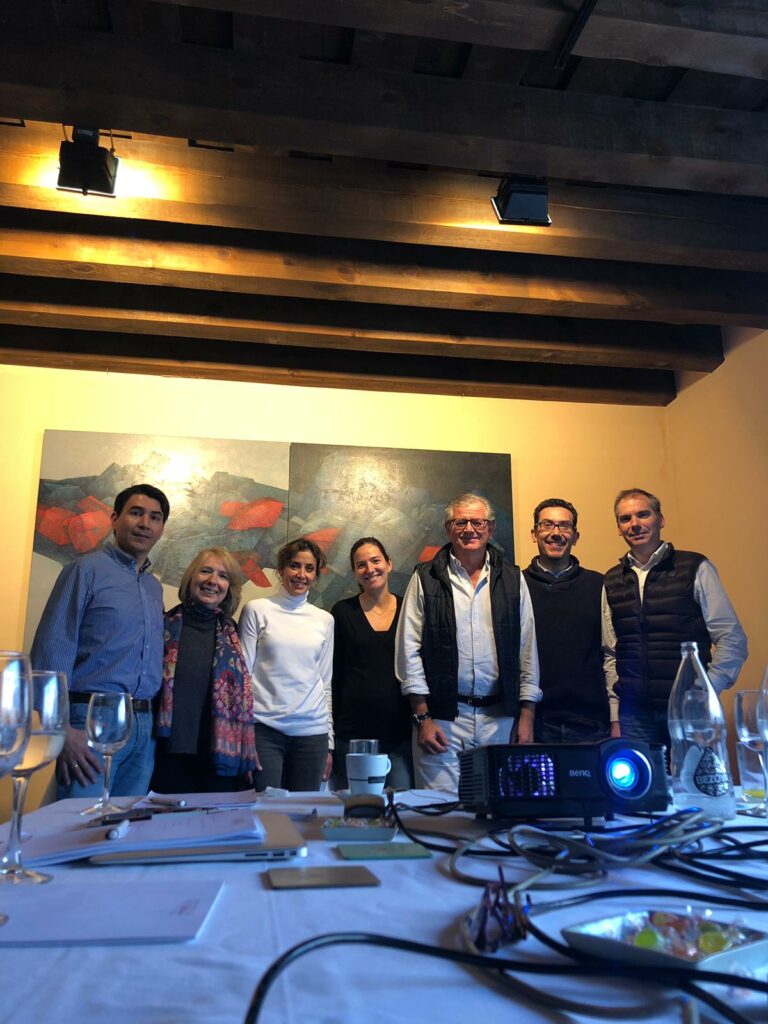
Strategic Meeting of the Department of Urology
Last Saturday, the urology team at Sanitas La Zarzuela University Hospital, led by Dr. Moncada, met at El el

ILUTS 2025 MADRID
On September 25 and 26, Dr. Moncada participated in the ILUTS 2025 MADRID conference with the session: “What is the best
Do you want to get rid of your kidney stones for good?
Our team offers you a comprehensive diagnosis, the most effective treatment for your condition, and personalized recommendations to help reduce the risk of recurrence. Call us or book your appointment online.