
DISEASES · PELVIC FLOOR · MALE INCONTINENCE

Urinary Incontinence in Men: A Problem with a Solution

Regain the control and peace of mind you need in your daily life

Urinary incontinence in men is much more common than people realize, and yet it remains one of the urological problems men find most difficult to discuss. Many patients wait months or even years before seeking help, convinced that it is inevitable. It isn’t. Today, there are effective solutions for every type and severity of male urinary incontinence, and in most cases, it’s possible to fully regain urinary control.

✓Experience with artificial urinary sphincters
✓Da Vinci robotic surgery
✓Publications on urethral implants
✓La Zarzuela Hospital, Madrid

Urinary incontinence in men is more common than you might think

Male urinary incontinence affects between 5% and 15% of adult men, and the rate skyrockets among those over 65. However, fewer than half seek consultation with a specialist. The main reason is embarrassment, followed by the mistaken belief that it is an inevitable part of aging. The reality is quite different: the vast majority of cases of urinary incontinence in men have an identifiable cause and an effective treatment.

Types of Male Urinary Incontinence

Not all cases of urinary leakage are the same. Identifying the type of incontinence is the first step toward finding the right solution.

Stress

Incontinence

It occurs when coughing, sneezing, laughing, lifting weights, or during physical exercise. It is the most common form following prostate surgery and is caused by a weakening of the sphincter mechanism. In mild cases, it can improve with pelvic floor rehabilitation; in moderate or severe cases, an artificial urinary sphincter offers a permanent solution.

Urge incontinence and overactive bladder

The patient feels a sudden, urgent need to urinate and is unable to reach the bathroom in time. The bladder contracts involuntarily before it is full. This may be related to prostate obstruction, neurological disorders, or occur for no apparent reason. It is treated with oral medication, intravesical Botox, or sacral neuromodulation, depending on the severity.

Incontinence After Prostate

Surgery

It is the most common cause of severe male urinary incontinence. Following a radical prostatectomy for cancer, between 5% and 20% of patients may experience persistent leakage after the first year. In these cases, the implantation of an artificial urinary sphincter permanently restores continence, with success rates exceeding 90%.

Causes of Male Urinary Incontinence

The most common causes of urinary incontinence in men include complications from prostate surgery (radical prostatectomy or transurethral resection), urinary tract obstruction due to benign prostatic hyperplasia, neurological diseases such as Parkinson’s disease, multiple sclerosis, or spinal cord injuries, side effects of certain medications, and general weakening of the pelvic floor with age. In many patients, several causes coexist, so an accurate diagnosis is essential for choosing the correct treatment.

How We Assess Urinary Incontinence at Our Center

The evaluation begins with a clinical interview during which we will ask you about the frequency, volume, and situations in which leakage occurs. We use validated questionnaires and a three-day voiding diary, which we will ask you to complete before your appointment. Additional tests may include a complete urodynamic study to measure bladder and sphincter function, an ultrasound of the urinary tract, a flowmetry test with measurement of post-void residual urine, and, if necessary, a cystoscopy to directly visualize the urethra and bladder.

Solutions for Urinary Incontinence in Men

Treatment depends on the type of incontinence, its severity, and its underlying cause. We take a progressive approach, starting with the least invasive options and reserving surgery for when it is truly necessary.

1

Pelvic Floor Rehabilitation and Lifestyle Changes

In cases of mild incontinence, especially following recent prostate surgery, Kegel exercises supervised by a specialized physical therapist can significantly improve urinary control. These are complemented by bladder retraining guidelines, adjustments to fluid intake, and changes to habits that worsen leakage.

2

Oral medication and intravesical Botox

For urge incontinence and overactive bladder, anticholinergics and beta-3 agonists help relax the bladder and reduce involuntary contractions. When oral medication is not sufficient or causes side effects, intravesical Botox offers an effective alternative: it is injected directly into the bladder wall in an operating room under sedation, and its effects last between six and twelve months.

3

Artificial urinary sphincter implant

For moderate or severe stress incontinence that does not improve with rehabilitation, the artificial urinary sphincter is the gold-standard solution. It is a device that surrounds the urethra and mimics the function of the natural sphincter, restoring the patient’s full control over urination. The procedure is performed using minimally invasive surgery, and long-term continence rates exceed 90%. Our team has extensive experience in the placement and follow-up of these devices.

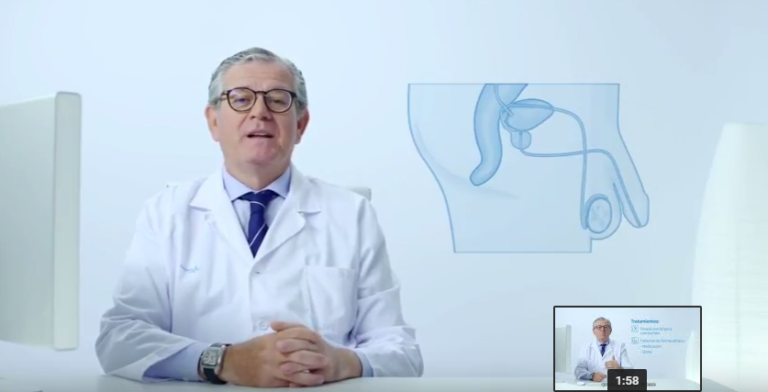
▶ Explanatory video on urinary incontinence in men and available treatment options

▶

You don’t have to keep living with urinary incontinence

Take the first step. Schedule a confidential consultation with our team.

The team treating your urinary incontinence in Madrid

Male urinary incontinence requires an accurate diagnosis and a surgeon with experience in prosthetic techniques. Dr. Moncada and his team have been implanting artificial urinary sphincters and publishing their results for more than two decades. They are active members of the leading European societies for functional and reconstructive urology, ensuring a state-of-the-art approach using the most advanced techniques.

Patients Who Have Regained Bladder Control

Real reviews from patients who have overcome urinary incontinence thanks to our team. Cases involving artificial urinary sphincters, pelvic floor rehabilitation, and intravesical Botox, sourced from Google Business Profile and verified health platforms.

Publicado en Google Google
Maiko Argudo profile picture
Maiko Argudo
Google star 1Google star 2Google star 3Google star 4Google star 5Trustindex verifica que la fuente original de la reseña sea Google.
Muy bueno
Publicado en Google Google
Manolo B profile picture
Manolo B
Google star 1Google star 2Google star 3Google star 4Google star 5Trustindex verifica que la fuente original de la reseña sea Google.
Contentisimo con la atención (siempre disponible) y la profesionalidad del Dr. Moncada y su equipo. Todo lo hicieron fácil y los resultados inmejorables. 100% recomendable.
Publicado en Google Google
Loli G profile picture
Loli G
Google star 1Google star 2Google star 3Google star 4Google star 5Trustindex verifica que la fuente original de la reseña sea Google.
El doctor Ignacio Moncada me parece uno de los mejores o Pero a mi marido con el robol davinchi y fue un esitoooo .como el nos dijo le aconsejó a todo el k este pasando por está situación de cáncer de próstata que Acuda a este urólogo. Trato especial y en todo momento nos dio paz y seguridad.
Publicado en Google Google
Alejandro Suárez González profile picture
Alejandro Suárez González
Google star 1Google star 2Google star 3Google star 4Google star 5Trustindex verifica que la fuente original de la reseña sea Google.
No tuve que esperar mucho a que me atendiese y el Dr. Moncada estuvo muy atento en todo momento. Recomendable.

Frequently Asked Questions About Urinary Incontinence in Men

Is urinary incontinence after prostate surgery permanent?

In most cases, no. After a radical prostatectomy, continence is usually regained gradually over the first 6 to 12 months, especially with pelvic floor rehabilitation. If incontinence persists beyond one year, an artificial urinary sphincter offers a permanent solution with success rates exceeding 90%.

No. The device is completely hidden under the skin. The patient activates it using a small pump located in the scrotum—a discreet and simple process. From the outside, no change is visible, and urination occurs naturally when the patient chooses to relax the sphincter.

Yes. Once you’ve fully recovered, you can exercise, travel, work, and have sex just as you normally would. The device is designed to function seamlessly in your daily life. It only requires periodic checkups with your urologist.

The injection is performed in the operating room under sedation. Most patients report mild discomfort, comparable to that of a cystoscopy, and can resume their normal activities the same day. The effects are noticeable within the first few days and last between six and twelve months.

Treatments We Offer for Male Incontinence

Advanced medical and surgical solutions to permanently restore urinary control.

Artificial

urinary sphincter implant

A permanent solution for moderate to severe stress incontinence. Restores urinary control permanently with continence rates exceeding 90%.

Intravesical

Botox

Treatment of overactive bladder and urge incontinence that does not respond to oral medication.

Surgery for Female Incontinence and Prolapse

If you’re looking for information on female incontinence, we have a specialized unit dedicated to treating urinary incontinence and pelvic organ prolapse in women.

Blog posts on urinary incontinence and the pelvic floor

We publish informative content on advances in the treatment of incontinence, pelvic floor rehabilitation, and the experiences of patients who have regained urinary control. Written by our team of specialists.

Ready to put urinary incontinence behind you?

Our team listens to you without judgment and with complete discretion. We’ll provide you with a comprehensive diagnosis and recommend the solution that best suits your situation. Many of our patients say their only regret is not having come in sooner.