
Peyronie's Disease: When the Penis Curves and Everything Changes
Understand what’s happening to you, what stage you’re at, and what can be done
One day you notice that something has changed. Perhaps a curvature that wasn’t there before, pain during an erection, a palpable lump on the penis, or the feeling that it has become shorter. If this sounds like you, it’s very likely that you have Peyronie’s disease. This condition involves the formation of a plaque of fibrous tissue inside the penis, causing it to progressively deform. It’s not uncommon, it’s not your fault, and, most importantly, it can be treated. On this page, we’ll explain everything you need to know to understand your situation and make informed decisions.

Symptoms of Peyronie's disease you should be aware of
Peyronie’s disease does not always appear suddenly. In many men, it begins subtly and progresses over weeks or months. The most common symptoms include a curvature of the penis during erection that was not present before, pain during erection or even at rest, a palpable plaque or lump under the skin of the penis, shortening or narrowing of the penis, and difficulty having sexual intercourse due to the curvature, pain, or loss of rigidity.
If you recognize any of these signs, don’t wait for them to get worse. An early evaluation expands your treatment options and improves outcomes.
What Causes Peyronie's Disease and How Does It Progress?
Causes and risk factors
The main cause is microtrauma during sexual intercourse, which, in predisposed individuals, triggers an excessive scarring response in the tunica albuginea of the penis. Risk factors include genetic predisposition (up to 20% of patients have affected relatives), Dupuytren’s disease, diabetes, hypertension, smoking, and previous penile trauma. An autoimmune component has also been described, which may explain why the disease progresses rapidly in some patients.
Acute or Inflammatory Phase
This stage lasts between 6 and 18 months. It is the phase in which the plaque is forming: the curvature may worsen, pain is frequent, and the size of the plaque may increase. Surgery is not performed during this phase because the disease is still active and surgical outcomes would be unpredictable. Treatment at this stage is conservative: oral medication, intralesional injections, and physical therapies to slow progression.
Stable or Chronic Phase
This stage is reached when the curvature has remained unchanged for at least three months, the pain has subsided, and the plaque has stabilized. This is the point at which surgery can be considered if the deformity interferes with sexual intercourse. Knowing which stage you are in is essential for choosing the right treatment and avoiding rushing into surgery.
What Happens Inside the Penis When Fibrous Plaque Forms
The penis contains two cylinders of spongy tissue (the corpora cavernosa) surrounded by an elastic membrane called the tunica albuginea. In Peyronie’s disease, a plaque of fibrous tissue forms within this membrane. The plaque prevents the affected area from stretching during an erection, causing the penis to curve toward the side of the fibrosis. It is neither a tumor nor an infection: it is a process of abnormal scarring.
How We Diagnose Peyronie's Disease
The diagnosis begins with a detailed clinical interview and a physical examination of the penis at rest. We will ask you to provide photographs of the penis during an erection to measure the exact angle of the curvature. This is supplemented by a penile ultrasound to locate and measure the fibrous plaque, and in selected cases, by a Doppler ultrasound with intracavernous injection to assess arterial flow and erectile function. Using all this information, we determine the stage of the disease and design the most appropriate treatment plan.
Treatment of Peyronie's disease in Madrid
There is no one-size-fits-all treatment for all patients. The choice depends on the stage of the disease, the degree of curvature, the presence of associated erectile dysfunction, and how it affects your sex life.
Conservative treatment in the acute phase
Treatment includes oral medication (vitamin E, pentoxifylline, colchicine), shock wave therapy, and penile traction. The goal is to control inflammation, reduce pain, and slow the progression of curvature while the condition stabilizes.
Penile Curvature Surgery
Reserved for the stable phase when curvature prevents a satisfying sex life. Techniques include plication (for mild curvatures without significant shortening), incision or excision of the plaque with grafting (for severe curvatures that preserve erection) and penile prosthesis implantation when Peyronie’s disease is accompanied by erectile dysfunction that does not respond to medication. Dr. Moncada, co-author of the European clinical guidelines on Peyronie’s disease, selects the most appropriate technique on a case-by-case basis.
▶ Video of Dr. Moncada explaining the stages of Peyronie’s disease and when to undergo surgery
Have you noticed a curvature that wasn’t there before?
Identifying the stage of your disease is the first step in choosing the right treatment.
A European leader in Peyronie's disease

Dr. Ignacio Moncada is a co-author of the European Association of Urology (EAU) clinical guidelines on Peyronie’s disease, the standard reference document used by urologists throughout Europe to diagnose and treat this condition. As president of the Spanish Association for Sexual Health (ASESA), he has more than 30 years of experience in andrology and is one of the surgeons with the highest number of cases involving penile curvature correction and penile prosthesis implantation in Spain.
Experiences of patients treated for Peyronie's disease
Real reviews from patients who have been treated for penile curvature at our center, using both conservative and surgical treatments. Taken from Google Business Profile and verified health platforms.
Publicado en Google
 Maiko Argudo
Trustindex verifica que la fuente original de la reseña sea Google.
Muy buenoPublicado en Google Manolo BContentisimo con la atención (siempre disponible) y la profesionalidad del Dr. Moncada y su equipo. Todo lo hicieron fácil y los resultados inmejorables. 100% recomendable.Publicado en Google
 Loli GEl doctor Ignacio Moncada me parece uno de los mejores o Pero a mi marido con el robol davinchi y fue un esitoooo .como el nos dijo le aconsejó a todo el k este pasando por está situación de cáncer de próstata que Acuda a este urólogo. Trato especial y en todo momento nos dio paz y seguridad.Publicado en Google
 Alejandro Suárez GonzálezNo tuve que esperar mucho a que me atendiese y el Dr. Moncada estuvo muy atento en todo momento. Recomendable.
The Most Common Questions Patients Ask About Peyronie's Disease
Does Peyronie's disease go away on its own?
In a small percentage of cases (between 5% and 13%), the curvature may improve spontaneously during the acute phase. However, in most patients, the deformity stabilizes or worsens. That is why an early evaluation is essential to allow for the initiation of conservative treatment while the disease is active and to plan for surgery if it ultimately becomes necessary.
Is it possible to have sex with Peyronie's disease?
It depends on the degree of curvature and whether there is associated erectile dysfunction. Many patients are able to have sex by adapting to the deformity, but when the curvature exceeds 30–40 degrees or causes pain, their sex life is seriously affected. In such cases, surgical treatment can restore normal function.
When is the right time to have surgery?
Surgery is only considered once the condition has reached a stable phase—that is, when the curvature has remained unchanged for at least three months and the pain has subsided. Operating earlier may lead to unsatisfactory results because the plaque has not yet finished forming. Your urologist will assess the stability of the condition before recommending surgery.
Does Peyronie’s surgery shorten the penis?
It depends on the technique used. Plication may result in minimal shortening (generally less than 1 cm). Graft techniques are designed to preserve or even restore length. When erectile dysfunction is present, a penile prosthesis allows for the correction of curvature without loss of functional length. Dr. Moncada will explain the pros and cons of each technique before you make a decision.
Treatments We Offer for Peyronie's Disease
Permanent surgical and functional solutions to correct penile curvature and restore your intimate life.
Penile Curvature Surgery
Plication, incision with graft, or excision of the plaque. The technique is selected based on the degree of curvature, penile length, and erectile function.
Penile Prosthesis Implantation
When Peyronie's disease is accompanied by severe erectile dysfunction, a hydraulic prosthesis corrects the curvature and restores erectile function in a single procedure.
Articles and publications on Peyronie's disease
Dr. Moncada and his team regularly publish articles on advances in the treatment of Peyronie’s disease, both in international scientific journals and on our informative blog. Evidence-based content designed to help you understand your situation.


EAA Andrology Course
On January 18 and 19, the European Academy of Andrology (European Academy) held its Andrology Course in Brussels
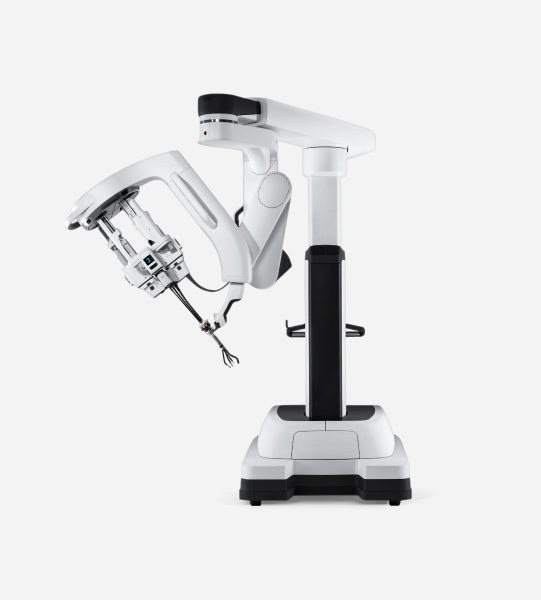
The Happy (and Necessary) Coexistence of Robots and Surgeons. By Dr. Moncada
A new article is published today in EL PAIS in which Dr. Moncada discusses all the advantages of the new system for urological surgery
The first step is to figure out what stage you’re in
If you notice that your penis has become curved, has lost length, or that sexual relations are no longer what they used to be, a consultation with a specialist will provide clarity on what is happening and what your actual options are. A confidential, no-obligation consultation with one of Europe’s leading experts in this condition.