
TREATMENT · PROSTATE CANCER · BLADDER CANCER · MINIMALLY INVASIVE ONCOLOGICAL SURGERY

Da Vinci robotic surgery in Madrid: radical prostatectomy with millimeter precision

The Da Vinci system is transforming urological surgery: robotic arms controlled by the surgeon with a precision impossible to achieve by hand, three-dimensional vision magnified up to ten times, and micro-incisions that reduce bleeding, pain, and recovery time. At M&S Robotic Urology, we have been performing radical prostatectomies, cystectomies, and nephrectomies using the Da Vinci system at La Zarzuela Hospital in Madrid for over a decade, with excellent functional outcomes in terms of urinary continence recovery.

✓ Over 10 years of experience with the Da Vinci robot at La Zarzuela
✓Excellent functional outcomes
✓Director of the Institute of Robotic Surgery in Madrid
✓Member of the EAU Guidelines Committee

What Is the Da Vinci Robot and Why Is It Changing Prostate Surgery?

The Da Vinci system is not an autonomous robot: it is an extension of the surgeon’s hands that translates each of their movements into precise actions inside the patient’s body, filtering out natural tremors and extending the range of motion of the instruments beyond what the human wrist allows. The magnified three-dimensional view allows for the identification of nerve and vascular structures with a clarity that conventional open or laparoscopic surgery cannot match.

Prostate, bladder, and kidney surgeries performed using the Da Vinci robot

The Da Vinci system allows us to treat the most common urological tumors with the same oncological precision as open surgery and the functional advantages of minimally invasive surgery.

Robotic radical prostatectomy for prostate cancer

Total prostatectomy using the Da Vinci robot is the gold standard surgical treatment for localized prostate cancer. The magnified view allows for the preservation of the neurovascular bundles responsible for erections with a precision that is very difficult to achieve in open surgery.

Robotic Radical Cystectomy for Bladder Cancer

For invasive bladder cancer requiring removal of the bladder, robotic radical cystectomy allows for complex surgery to be performed through small incisions, resulting in less blood loss and a shorter recovery time than open cystectomy.

Robotic radical and partial nephrectomy for kidney cancer

For kidney tumors, the Da Vinci robot allows for both complete removal of the kidney (radical nephrectomy) and partial resection of the tumor while preserving as much healthy kidney tissue as possible (partial nephrectomy). This second option, which is technically more demanding, protects long-term kidney function and improves the patient’s prognosis.

Why Choose Da Vinci Robotic Surgery Over Open Surgery

Scientific evidence accumulated over more than two decades confirms the advantages of the robotic approach: less intraoperative blood loss and a reduced need for transfusions, shorter hospital stays, less postoperative pain and lower analgesic use, faster recovery of urinary continence and erectile function, and minimal scarring. Oncological outcomes are equivalent to or better than those of open surgery when performed by experts.

Results of robotic prostate surgery at our center

Data from our team, published in international scientific journals, show a very favorable recovery of urinary continence following robotic radical prostatectomy, with a rate of positive surgical margins of less than 8% in localized tumors. Erectile function is restored in a significant percentage of patients when the neurovascular bundles are preserved. Continence outcomes vary depending on age, the patient’s pre-existing condition, and other individual factors, and these results can only be consistently achieved with a well-established learning curve and a sufficient case volume.

What the Da Vinci prostate surgery process is like at our center

From your first appointment to your final discharge, we’ll be with you every step of the way so you know exactly what to expect and can prepare without any surprises.

1

Preoperative Evaluation and Surgical

Planning

Before the procedure, a multiparametric MRI of the prostate is performed to assess the extent of the tumor and plan for the preservation of the neurovascular bundles. This is supplemented by laboratory tests, an electrocardiogram, and an anesthesiological evaluation. The surgical team reviews each case in a multidisciplinary meeting before surgery to agree on the most appropriate strategy.

2

Recovery and oncological follow-up after robotic surgery

Patients are typically discharged from the hospital 2–3 days after multiport surgery and the following day after single-port surgery. The urinary catheter is removed 7 to 10 days after surgery. Oncological follow-up includes PSA tests at 3, 6, and 12 months to verify cure. Pelvic floor rehabilitation—with supervised Kegel exercises—accelerates the recovery of continence. Long-term follow-up with the urologist ensures the early detection of any signs of recurrence.

→ Have you been diagnosed with prostate cancer? Visit our page on prostate and bladder cancer

▶ Video of Dr. Moncada explaining robotic radical prostatectomy using the Da Vinci system

▶

Have you been diagnosed with prostate cancer and want to know if you’re a candidate for robotic surgery?

Dr. Moncada will review your case and explain all the available options to you.

The robotic surgeon who will perform your prostate surgery in Madrid

Dr. Ignacio Moncada is Director of the Institute of Robotic Surgery in Madrid and Chief of the Urology Department at La Zarzuela Hospital. With more than ten years of experience performing surgeries using the Da Vinci system and 152 international scientific publications to his credit, he is a member of the Clinical Guidelines Committee of the European Association of Urology (EAU). Together with Dr. Claudia Zaccaro—who completed a fellowship in robotic surgery at La Zarzuela and is a Fellow of the European Board of Urology—they form one of the most experienced robotic teams in Madrid.

Testimonials from patients who have undergone surgery with the Da Vinci robot

Real reviews from patients who have undergone Da Vinci robotic surgery for prostate, bladder, or kidney cancer at our center. Taken from Google Business Profile and verified health platforms.

Publicado en Google Google
Maiko Argudo profile picture
Maiko Argudo
Google star 1Google star 2Google star 3Google star 4Google star 5Trustindex verifica que la fuente original de la reseña sea Google.
Muy bueno
Publicado en Google Google
Manolo B profile picture
Manolo B
Google star 1Google star 2Google star 3Google star 4Google star 5Trustindex verifica que la fuente original de la reseña sea Google.
Contentisimo con la atención (siempre disponible) y la profesionalidad del Dr. Moncada y su equipo. Todo lo hicieron fácil y los resultados inmejorables. 100% recomendable.
Publicado en Google Google
Loli G profile picture
Loli G
Google star 1Google star 2Google star 3Google star 4Google star 5Trustindex verifica que la fuente original de la reseña sea Google.
El doctor Ignacio Moncada me parece uno de los mejores o Pero a mi marido con el robol davinchi y fue un esitoooo .como el nos dijo le aconsejó a todo el k este pasando por está situación de cáncer de próstata que Acuda a este urólogo. Trato especial y en todo momento nos dio paz y seguridad.
Publicado en Google Google
Alejandro Suárez González profile picture
Alejandro Suárez González
Google star 1Google star 2Google star 3Google star 4Google star 5Trustindex verifica que la fuente original de la reseña sea Google.
No tuve que esperar mucho a que me atendiese y el Dr. Moncada estuvo muy atento en todo momento. Recomendable.

Frequently Asked Questions About Prostate Surgery Using the Da Vinci Robot

Does the Da Vinci robot operate on its own?

No. The Da Vinci robot is an advanced surgical instrument controlled at all times by the surgeon from a console. It does not make any decisions on its own. Dr. Moncada directs every movement of the robotic arms with complete precision. The robot enhances his skill; it does not replace it.

Recovery of bladder control is gradual and varies from patient to patient. Most patients regain bladder control within the first few weeks after the catheter is removed. With pelvic floor rehabilitation exercises, most of our patients achieve good bladder control within six months. Full recovery may take up to a year in some cases.

When the tumor allows it, we preserve the neurovascular bundles responsible for erections. Recovery of erectile function depends on age, previous erectile function, and the technique used. In young patients with good prior erectile function and a localized tumor, recovery rates are significantly higher with robotic surgery than with open surgery.

Private insurance policies typically do not cover robotic surgery, as it involves a copayment (PEG). We recommend that you check with your insurance provider before your appointment to verify coverage and pricing. Our administrative team can assist you with this process.

Treatments Related to Robotic Prostate Surgery

After a radical prostatectomy, certain complications may arise, but we can treat them at our center.

Penile Prosthesis Implantation

For post-prostatectomy erectile dysfunction that does not respond to oral medication. A permanent solution with the highest satisfaction rates.

Artificial urinary sphincter implant

For severe, persistent urinary incontinence following prostate surgery. Restores urinary control permanently.

Blog posts on robotic surgery and urological cancer

Dr. Moncada and his team regularly publish articles on advances in robotic surgery, international urological oncology conferences, and the results of our surgical series. Content based on real scientific evidence.

Uncategorized

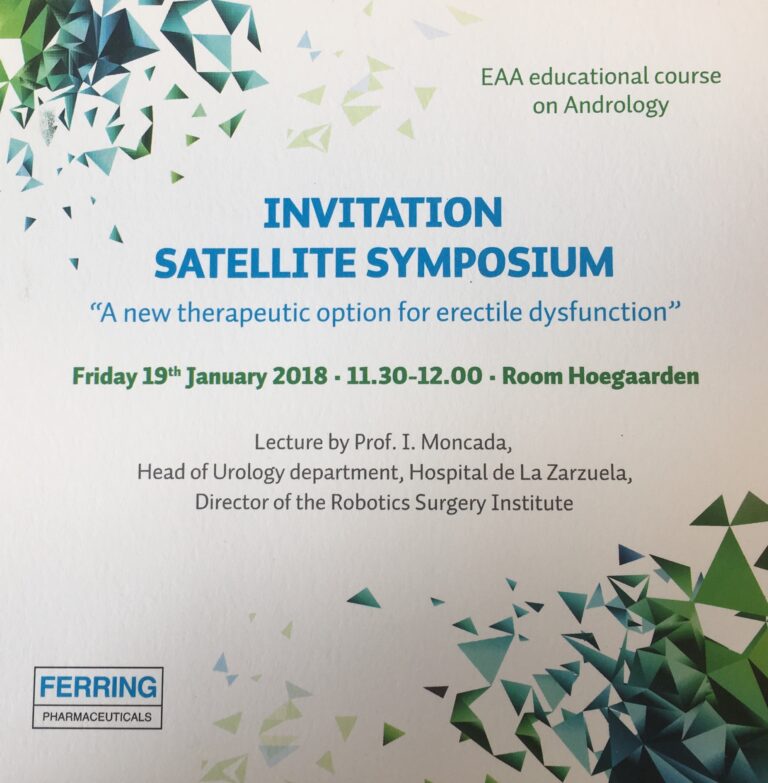
EAA Andrology Course

On January 18 and 19, the European Academy of Andrology (European Academy) held its Andrology Course in Brussels

Read more >>

A diagnosis of prostate cancer is not a death sentence

Da Vinci robotic surgery offers the highest standards of cancer care with the least impact on your quality of life. Whether you’ve recently been diagnosed or are seeking a second opinion, our team is ready to review your case. Call us or book your appointment online.