
Surgery for female urinary incontinence and prolapse in Madrid
When pelvic floor rehabilitation and conservative treatments are not sufficient, minimally invasive surgery offers a lasting solution for stress urinary incontinence and pelvic organ prolapse in women. Current techniques allow for the correction of incontinence and pelvic organ prolapse through minimal incisions, with a recovery time of just a few days and long-term results. At our center, Dr. Moscatiello and his team are the leading specialists in pelvic floor reconstructive surgery.
When Is Surgery for Female Urinary Incontinence Recommended?
Surgery for female urinary incontinence is considered when conservative treatments have not achieved the expected results or when the severity of the incontinence and its impact on quality of life warrant a more definitive solution. Ideal candidates are women with moderate or severe stress incontinence (leakage when coughing, sneezing, laughing, or exercising), women with symptomatic pelvic floor prolapse, and women with mixed incontinence in whom the stress component is predominant.
Surgical Techniques for Incontinence and Prolapse
The choice of technique depends on the type and severity of incontinence, whether there is an associated prolapse, and the clinical characteristics of each patient. We always tailor the surgery to each individual’s specific situation.
TOT and TVT suburethral slings for stress incontinence
The suburethral sling (TOT or TVT technique) is the standard surgical treatment for stress urinary incontinence in women. A support sling is placed beneath the mid-urethra through a small vaginal incision. It provides urethral support that prevents urine leakage during physical exertion, with cure rates exceeding 85% at ten years. The procedure is performed in the operating room, and patients are discharged the following day.
Robotic colposacropexy for pelvic floor prolapse
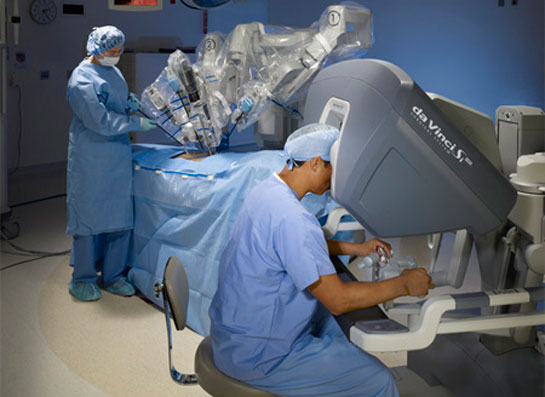
For pelvic floor prolapse, including vaginal vault prolapse following hysterectomy, colposacropexy is the technique that yields the best long-term anatomical and functional results. Using a robotic approach, the vaginal dome is secured to the anterior sacral ligament with a supportive material that keeps the pelvic organs in their natural position. Dr. Moscatiello is one of the leading experts in robotic colposacropexia/pectopexy in Spain, with extensive experience documented in published works and presented at national conferences.
Vaginal repair of prolapse
For milder cases of prolapse or in patients for whom an abdominal approach is not the most appropriate, anterior and posterior colporrhaphy performed vaginally allows for the correction of pelvic organ prolapse using a less complex surgical technique. Recovery is quick, and the results are long-lasting for mild or moderate prolapse.
Surgery for incontinence and prolapse is safe when performed with the proper technique and equipment
The controversy surrounding certain materials used in prolapse surgeries does not affect the techniques used for stress incontinence, whose long-term safety and efficacy are supported by thousands of studies. The materials we use for TOT and TVT slings have an excellent safety profile documented over more than 25 years. At our center, each case is evaluated individually to select the material and technique that offer the best results with the lowest risk.
Results of incontinence and prolapse surgery at our center
The cure rates for stress incontinence treated with a suburethral sling exceed 85–90% at ten years in our series. For pelvic floor prolapse treated with colposacropexia, long-term data show anatomical correction rates exceeding 90% at five years. Patient satisfaction is significantly higher after surgery compared to conservative treatments. Recovery usually takes just a few days, with a return to normal life within two or three weeks.
What to Expect During Female Urinary Incontinence Surgery at Our Center
The process varies depending on the technique used, but in all cases we strive to ensure that the patient arrives with all the necessary information and leaves with the most comfortable recovery possible.
Preoperative Evaluation and Selection of the Technique
Before surgery, a comprehensive urodynamic study is performed to confirm the type and severity of incontinence, along with a pelvic floor ultrasound and a gynecological evaluation. With all this information, the specialist explains in detail the recommended procedure, the risks, the benefits, and postoperative care. The patient actively participates in the decision-making process and signs the informed consent form once any questions have been resolved.
Recovery and Follow-Up After Surgery for Prolapse and Incontinence
For the suburethral sling procedure, patients are discharged within 24 hours and can resume normal activities in 2–3 weeks. For colposacropexy, patients are discharged in 2–3 days—or one day if the single-port technique is used—and full recovery takes about 4 weeks. In both cases, it is recommended to avoid strenuous physical activity during the first month and to abstain from sexual intercourse for the first few weeks. Follow-up care includes checkups at one month, three months, and annually to assess functional and anatomical outcomes.
▶ Explanatory video on female incontinence surgery and robotic colposacropexy for prolapse
Has rehabilitation not been enough, and are incontinence issues still limiting your life?
Our specialists will evaluate your case and recommend the most appropriate surgical technique.
The specialists in female urinary incontinence at our center in Madrid

Dr. Pietro Moscatiello is a specialist in functional urology and robotic pelvic floor surgery, with publications and presentations on robotic colposacropexy and female sphincter implantation at major national conferences. Dr. Claudia Zaccaro brings specialized training in robotic pelvic surgery and women’s urology, having completed a fellowship at La Zarzuela Hospital under Dr. Moncada and gained international experience in urogynecology. Together, they form the leading team in pelvic floor reconstructive surgery at our center.
Women Who Regained Their Freedom After Surgery for Incontinence and Prolapse
Real reviews from patients who have undergone surgery for stress urinary incontinence or pelvic floor prolapse at our center. Taken from Google Business Profile and verified health platforms.
Publicado en Google
 Maiko Argudo
Trustindex verifica que la fuente original de la reseña sea Google.
Muy buenoPublicado en Google Manolo BContentisimo con la atención (siempre disponible) y la profesionalidad del Dr. Moncada y su equipo. Todo lo hicieron fácil y los resultados inmejorables. 100% recomendable.Publicado en Google
 Loli GEl doctor Ignacio Moncada me parece uno de los mejores o Pero a mi marido con el robol davinchi y fue un esitoooo .como el nos dijo le aconsejó a todo el k este pasando por está situación de cáncer de próstata que Acuda a este urólogo. Trato especial y en todo momento nos dio paz y seguridad.Publicado en Google
 Alejandro Suárez GonzálezNo tuve que esperar mucho a que me atendiese y el Dr. Moncada estuvo muy atento en todo momento. Recomendable.
Frequently Asked Questions About Female Incontinence and Prolapse Surgery
Is incontinence surgery safe?
The suburethral sling for stress incontinence has more than 25 years of clinical follow-up and is safe when the correct material is used and the procedure is performed using the appropriate technique. At our center, we evaluate each case individually and only recommend surgery when the benefits clearly outweigh the risks. We’ll explain everything in detail before you make any decision.
How long does recovery take after prolapse surgery?
For the suburethral sling procedure, most patients are back to their normal lives within 2–3 weeks. For robotic colposacropexy, recovery takes about 4 weeks. In both cases, it is recommended to avoid physical exertion during the first month and sexual intercourse during the first few weeks. Symptoms begin to improve within the first few weeks.
Can incontinence surgery be combined with prolapse repair?
Yes, and in many cases, it is the most recommended option. When stress incontinence and pelvic floor prolapse coexist, both problems can be corrected in the same procedure, sparing the patient a second surgery. Our team plans the most comprehensive and efficient approach for each case.
Do I need a referral from my primary care physician to have surgery at a private clinic?
No. At our private practice, you can schedule an appointment directly with the specialist without needing a prior referral. If you have any previous test results (urodynamics, ultrasounds, gynecological reports), it will help us if you bring them with you, but they are not required for the first consultation.
Other treatments for female urinary incontinence at our center
If this surgery is not the most appropriate option for you, we offer other effective alternatives for female urinary incontinence.
Intravesical Botox
For urge incontinence and overactive bladder that do not respond to oral medication. A minimally invasive, outpatient, and repeatable alternative.
For severe stress incontinence that has not responded to previous surgeries. The robotic artificial female sphincter offers a permanent solution.
Blog posts on female incontinence and prolapse surgery
Our team publishes informative content on surgical techniques for incontinence and prolapse, advances in robotic pelvic floor surgery, and postoperative care. Written and reviewed by the team’s specialists.
Benefits of Robotic Surgery
In the article “Surgical Excellence of the Da Vinci Robot” on Top Doctor, Dr. Moncada discusses the Da Vinci robot as a minimally invasive technique, which reduces the

19th ASESA Congress
Last weekend, Dr. Moncada participated in the ASESA conference, the Meeting on Andrology, Sexual Medicine, and Reproductive Medicine. On this occasion
Saudi ED-BPH Forum, May 29, 2015 – Jeddah, Saudi Arabia
On May 29, the ED-HBP Forum, sponsored by Lilly, was held in Jeddah, Saudi Arabia. Dr. Moncada delivered the following lecture: "Managing
You’ve been dealing with incontinence for a while, and you deserve a lasting solution
Minimally invasive surgery for urinary incontinence and prolapse has success rates of over 85–90% and a recovery time of just a few days. If you want to get back to playing sports, laughing, and living without worrying about leaks, the first step is a consultation with our specialists. It’s no-obligation, and you’ll get all the information you need to make a decision.