
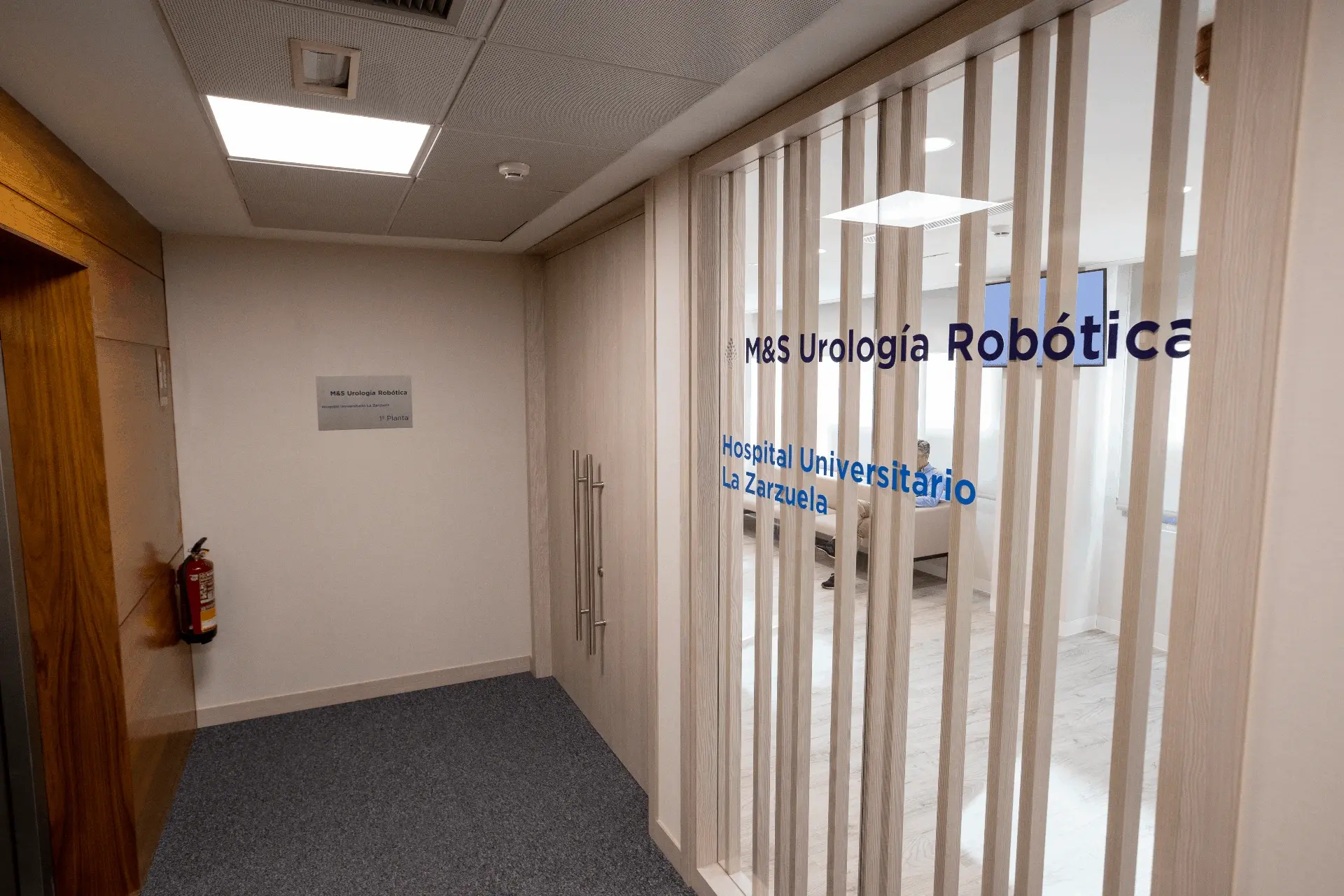



Early Detection and Robotic Surgery for Prostate Cancer
Learn about symptoms, diagnostic tests, and treatment options from leading specialists in Madrid
Prostate cancer is the most common malignant tumor in men in Spain. However, when detected in localized stages, the chances of a cure exceed 90%. The problem is that in its early stages, it produces no symptoms, which makes early diagnosis through PSA testing and MRI absolutely crucial. On this page, we explain how to recognize the warning signs, what tests you should get, and what treatment options are available today with Da Vinci robotic surgery.
What Is Prostate Cancer and Why Is Early Detection So Important?
The prostate is a walnut-sized gland located below the bladder that is part of the male reproductive system. Prostate cancer develops when cells in this gland begin to multiply uncontrollably. Not all prostate cancers are the same: some grow very slowly and will never cause symptoms, while others are aggressive and spread rapidly to nearby tissues and lymph nodes. Identifying the type of tumor and its aggressiveness (Gleason score) is essential for choosing the most appropriate treatment.
Prostate Cancer Symptoms You Shouldn’t Ignore
Prostate cancer is known as a “silent” tumor because it generally does not produce symptoms in its early stages. When symptoms do appear, they usually indicate that the tumor has grown large enough to compress the urethra or that local spread has already occurred. The most common symptoms fall into two categories.
Urinary Symptoms of Prostate Cancer
Difficulty starting urination, a weak or intermittent urine stream, the need to urinate more frequently, a feeling of incomplete bladder emptying, and, in some cases, blood in the urine (hematuria) or in the semen (hematospermia). These symptoms may also be indicative of benign prostatic hyperplasia (BPH), so only a urologist can distinguish between them using the appropriate tests.
Signs of Advanced Prostate Cancer
Persistent pain in the lower back, hip, or pelvis; unexplained weight loss; severe fatigue; or weakness in the legs may indicate that the tumor has spread beyond the prostate capsule. These symptoms require urgent evaluation. However, the goal of early detection is precisely to intervene before these signs appear.
Why Many Tumors Are Diagnosed Without Prior Symptoms
Most prostate cancers that are cured today are detected before the patient has noticed any symptoms: through a routine PSA (prostate-specific antigen) test or during a preventive urological checkup. That is why regular checkups starting at age 45–50 are the most effective screening tool available.
Causes of Prostate Cancer and Risk Factors
The exact cause of prostate cancer is not fully understood, but the factors that increase the risk of developing it are well established. Age is the primary factor: the disease is rare before age 50, and its incidence increases significantly after age 65. A first-degree family history (a father or brother with prostate cancer) increases the risk two- to threefold, especially if the diagnosis occurred before age 65. Ethnicity also plays a role: men of African descent are at higher risk. A diet high in saturated fats and a sedentary lifestyle have been linked to a higher incidence, while consumption of tomatoes (lycopene), olive oil, and foods rich in antioxidants appears to have a protective effect.
How Prostate Cancer Is Diagnosed: From PSA to Fusion Biopsy
Diagnosis begins with a blood PSA test and a digital rectal exam. When the results are suspicious, the next step is a multiparametric MRI of the prostate, which can identify lesions with much greater sensitivity than conventional transrectal ultrasound. If the MRI detects a suspicious area, an image-guided fusion biopsy is performed to obtain samples precisely from the most suspicious areas. The biopsy results determine the tumor’s aggressiveness using the Gleason score and its risk group according to the EAU guidelines, which guide the treatment plan.
Prostate Cancer Treatment Based on Tumor Stage and Risk
We offer a variety of treatment options
Active Surveillance for Low-Risk Tumors
For localized, low-risk tumors (Gleason 6, low PSA, stage T1-T2a), active surveillance avoids other treatments by maintaining close monitoring with periodic PSA tests, MRIs, and scheduled biopsies. We recommend this strategy only when the patient is very elderly or in isolated cases.
Da Vinci robotic radical prostatectomy for cancer
For intermediate- and high-risk prostate cancer, robotic radical prostatectomy is the standard surgical treatment. The Da Vinci robot allows for the complete removal of the prostate and seminal vesicles with a precision not possible in open surgery, preserving the neurovascular bundles responsible for erections and reducing the risk of postoperative incontinence. Our team has over a decade of experience with this technique, with a urinary continence rate of 97% at six months.
▶ Video by Dr. Moncada on the early diagnosis of prostate cancer and robotic radical prostatectomy
Do you have an elevated PSA level, or has something been detected in your prostate?
Dr. Moncada will review your case and clearly explain all of your available options.
Your prostate cancer specialist in Madrid
Dr. Ignacio Moncada is Director of the Institute of Robotic Surgery in Madrid, Chief of the Urology Department at La Zarzuela Hospital, and a member of the Clinical Guidelines Committee of the European Association of Urology (EAU), the organization that develops treatment standards for prostate cancer throughout Europe. With more than 30 years of experience in prostate urological oncology, 152 international scientific publications, and more than a decade of performing surgeries with the Da Vinci robot, his expertise is backed by his own clinical results published in top-tier scientific journals.
Experiences of patients who underwent prostate cancer surgery at our center
Real reviews from patients who have undergone diagnosis and surgical treatment for prostate cancer at our center. Taken from Google Business Profile and verified health platforms.
Publicado en Google![]()
Maiko ArgudoTrustindex verifica que la fuente original de la reseña sea Google.
Muy buenoPublicado en Google![]()
Manolo BTrustindex verifica que la fuente original de la reseña sea Google.
Contentisimo con la atención (siempre disponible) y la profesionalidad del Dr. Moncada y su equipo. Todo lo hicieron fácil y los resultados inmejorables. 100% recomendable.Publicado en Google![]()
Loli GTrustindex verifica que la fuente original de la reseña sea Google.
El doctor Ignacio Moncada me parece uno de los mejores o Pero a mi marido con el robol davinchi y fue un esitoooo .como el nos dijo le aconsejó a todo el k este pasando por está situación de cáncer de próstata que Acuda a este urólogo. Trato especial y en todo momento nos dio paz y seguridad.Publicado en Google![]()
Alejandro Suárez GonzálezTrustindex verifica que la fuente original de la reseña sea Google.
No tuve que esperar mucho a que me atendiese y el Dr. Moncada estuvo muy atento en todo momento. Recomendable.
Frequently Asked Questions About Prostate Cancer
What does it mean to have an elevated PSA level?
An elevated PSA level does not necessarily indicate cancer. It may be due to benign prostatic hyperplasia, inflammation (prostatitis), or other causes. However, an elevated or rapidly rising PSA level always warrants a comprehensive urological evaluation, including a digital rectal exam and, if necessary, an MRI and biopsy.
What happens to erections and continence after surgery?
With Da Vinci robotic surgery, we preserve the neurovascular bundles responsible for erections whenever the tumor allows. Recovery of continence is gradual: 97% of our patients regain continence within six months with pelvic floor rehabilitation. Erectile function depends on age, preoperative condition, and the technique used, and may require additional treatment.
At what age should you start getting a PSA test?
European guidelines recommend an initial PSA test at age 50 for men without risk factors, or at ages 40–45 if there is a family history of prostate cancer or if the man is of African descent. The frequency of follow-up is adjusted based on the test results.
Treatments available for prostate cancer at our center
We offer both surgical treatment for tumors and solutions for the complications that may arise after prostate surgery.
Da Vinci robotic surgery for prostate cancer
Robotic radical prostatectomy. The gold-standard surgical treatment with the highest cancer cure rates and the least functional impact.
urinary sphincter implant
For severe, persistent urinary incontinence following radical prostatectomy. Restores urinary control permanently.
Prosthesis Implantation
For post-prostatectomy erectile dysfunction that does not respond to oral medication. The permanent solution with the highest satisfaction rate.
Blog posts about prostate cancer and robotic surgery
Dr. Moncada and his team regularly publish articles on advances in the diagnosis and treatment of prostate cancer, robotic surgery, and international uro-oncology conferences. Content based on real scientific evidence and reviewed by specialists.

2nd International Course on Urinary Incontinence and Pelvic Floor Surgery (March 1)
On March 1, the doctor participated in the 2nd International Course on Urinary Incontinence and Pelvic Floor Surgery, held at the
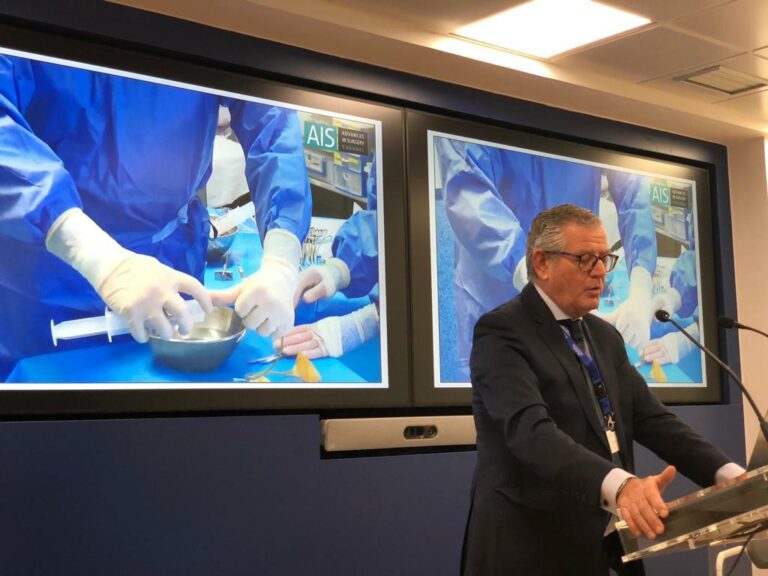
TACTRA 2020 - 1st Meeting of Experts on Erectile Dysfunction
Last Friday, Dr. Moncada participated in TACTRA 2020, the 1st Meeting of Experts on Erectile Dysfunction, alongside Drs. Lledo and Martínez-
12th Annual Congress of the Russian Society of Urology.
On the 8th and 9th, Dr. Moncada participated in the 12th Annual Congress of the Russian Urological Society. At this
When detected early, prostate cancer is curable—and time is of the essence
If you have an elevated PSA level, have been diagnosed with a prostate condition, or simply want a preventive checkup starting at age 45–50, a consultation with Dr. Moncada can make all the difference. Comprehensive diagnosis, second opinions, and access to the most advanced robotic surgery in Madrid. Call us or book your appointment online.