

TREATMENT · BENIGN PROSTATIC HYPERPLASIA (BPH)

Green-laser prostate surgery in Madrid with no incisions; discharged within 24 hours

Green laser therapy, also known as selective prostate photovaporization (PVP), is the gold-standard minimally invasive technique for treating benign prostatic hyperplasia when medication is no longer sufficient. It requires no incisions, is performed under anesthesia, and involves a one-day hospital stay, with discharge the following day. It is particularly suitable for men taking anticoagulant medication, as it causes virtually no bleeding.

✓ Over 15 years of experience performing prostate photovaporization
✓State-of-the-art GreenLight™ laser system
✓Members of the AEU and EAU
✓La Zarzuela Hospital, Madrid

What Is the Green Laser and How Does It Remove Prostate Tissue?

The green laser is a photovaporization system that uses high-energy light (532 nm, green) to selectively vaporize prostate tissue that obstructs urine flow. Unlike traditional transurethral resection (TUR), which cuts the tissue with an electric loop, the green laser directly vaporizes it while simultaneously providing a hemostatic effect that virtually eliminates bleeding. The result is an obstruction-free urethra and immediate improvement in urinary flow, without the need for external incisions and with a much faster recovery.

Who Benefits from Green Laser Treatment and What the Prostate Surgery Is Like

Not all patients with BPH are ideal candidates for the same surgical technique. The green laser has very clear indications and offers the best results for a specific patient profile.

Ideal Candidates for Laser Prostate Surgery

The green laser is particularly recommended for men with small- or medium-sized benign prostatic hyperplasia (up to 80–100 cc) whose symptoms are not controlled by medication, for patients on anticoagulants (since the risk of bleeding is minimal), and for those who want a quick recovery and a short hospital stay. It is also an excellent option for patients with a urinary catheter due to acute urinary retention.

A Step-by-Step Guide to Green Laser Surgery

The procedure is performed under spinal or general anesthesia and lasts between 45 and 90 minutes, depending on the size of the prostate. The surgeon inserts a cystoscope through the urethra and applies the laser directly to the prostate tissue obstructing the flow of urine, vaporizing it in a controlled manner. After the procedure, a urinary catheter is inserted and removed after 12–24 hours. The patient is discharged the following day and can resume his normal daily activities in one or two weeks.

Recovery After Green Laser Prostate Surgery

During the first few days, you may experience mild discomfort when urinating (burning sensation, increased frequency), which usually subsides within two or three weeks. Blood in the urine is minimal and self-limiting. After two weeks, most patients already notice a very significant improvement in urinary flow. It is recommended to avoid strenuous physical activity during the first month and to stay well-hydrated. Sexual function (erection and ejaculation) is generally preserved, although retrograde ejaculation may occur.

Advantages of Green Laser Therapy Over Traditional Prostate Surgery

Compared to conventional transurethral resection (TURP), the green laser results in less intraoperative bleeding (crucial for patients on anticoagulants), shorter postoperative bladder catheterization time, a shorter hospital stay (typically 24 hours versus 2–3 days), faster recovery, a lower risk of post-TURP syndrome due to absorption of irrigation fluid, and equivalent long-term functional outcomes. It is reproducible, with a well-documented learning curve and a minimal hospital stay.

Results of BPH Treatment with Green Laser

Long-term studies show that more than 85% of patients maintain a significant improvement in urinary flow and BPH symptoms five years after the procedure. The IPSS (International Prostate Symptom Score) improves by an average of 70–80%, and maximum urinary flow (Qmax) doubles or triples compared to preoperative values. The reoperation rate at five years is less than 10%.

Before and after green laser prostate surgery at our center

To make the process as straightforward as possible, we’ll explain exactly what happens from your first appointment through to full recovery.

1

Preoperative Preparation and Evaluation

During the initial consultation, a transrectal or suprapubic ultrasound is performed to measure prostate volume, a urine flow test is conducted to assess urinary flow, and a blood test for PSA is performed. If the patient is taking anticoagulants, we will coordinate with their primary care physician to adjust the medication. On the day of the procedure, the patient must fast.

2

Postoperative Follow-up and Outcome Monitoring

A follow-up appointment is scheduled 4–6 weeks later to assess urinary flow using a flowmeter and verify that recovery is proceeding normally. At three months, a PSA test and a complete functional evaluation are performed. Annual follow-up allows for the early detection of any signs of recurrence and enables treatment adjustments if necessary.

→ Do you have an enlarged prostate? Check out our page on benign prostatic hyperplasia (BPH)

▶ Explanatory video by Dr. Moncada on green laser prostate surgery

▶

Would you like to know if green laser treatment is the right option for your prostate?

Schedule an appointment, and Dr. Moncada will evaluate your case using all the necessary tests.

Your Surgeon for Laser Prostate Surgery in Madrid

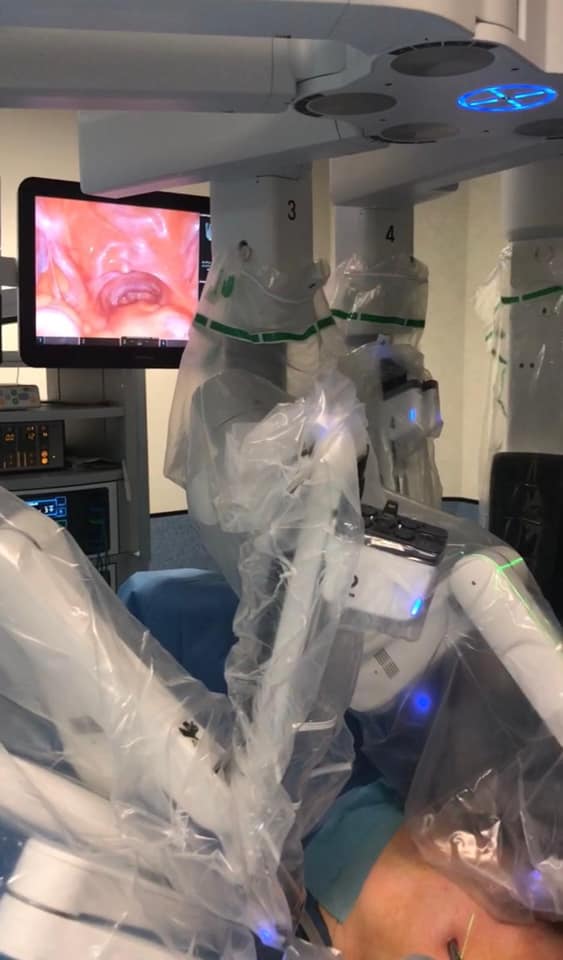
Dr. Ignacio Moncada is Chief of Urology at La Zarzuela Hospital and Director of the Institute of Robotic Surgery in Madrid. With over 30 years of experience in prostate surgery and 152 international scientific publications, he is one of the most experienced urologists in the surgical treatment of BPH in Spain. Certified in Da Vinci robotics and an expert in laser techniques, he selects the most appropriate technique for each case based on prostate volume, the patient’s health status, and the patient’s preferences.

Testimonials from patients who have undergone green laser prostate surgery

Real reviews from patients who have undergone green laser surgery for BPH at our center. Taken from Google Business Profile and verified health platforms.

Publicado en Google Google
Maiko Argudo profile picture
Maiko Argudo
Google star 1Google star 2Google star 3Google star 4Google star 5Trustindex verifica que la fuente original de la reseña sea Google.
Muy bueno
Publicado en Google Google
Manolo B profile picture
Manolo B
Google star 1Google star 2Google star 3Google star 4Google star 5Trustindex verifica que la fuente original de la reseña sea Google.
Contentisimo con la atención (siempre disponible) y la profesionalidad del Dr. Moncada y su equipo. Todo lo hicieron fácil y los resultados inmejorables. 100% recomendable.
Publicado en Google Google
Loli G profile picture
Loli G
Google star 1Google star 2Google star 3Google star 4Google star 5Trustindex verifica que la fuente original de la reseña sea Google.
El doctor Ignacio Moncada me parece uno de los mejores o Pero a mi marido con el robol davinchi y fue un esitoooo .como el nos dijo le aconsejó a todo el k este pasando por está situación de cáncer de próstata que Acuda a este urólogo. Trato especial y en todo momento nos dio paz y seguridad.
Publicado en Google Google
Alejandro Suárez González profile picture
Alejandro Suárez González
Google star 1Google star 2Google star 3Google star 4Google star 5Trustindex verifica que la fuente original de la reseña sea Google.
No tuve que esperar mucho a que me atendiese y el Dr. Moncada estuvo muy atento en todo momento. Recomendable.

Frequently Asked Questions About Green Laser Prostate Surgery

Does the green laser hurt?

The procedure is performed under spinal or general anesthesia, so the patient feels nothing during the procedure. In the days following the procedure, mild discomfort when urinating may occur, similar to that of a urinary tract infection; this discomfort gradually subsides within 2–3 weeks and is easily managed with conventional pain medication.

Long-term studies show that more than 85% of patients maintain significant improvement at the five-year mark. The reoperation rate is less than 10% over that period. The results are comparable to those of open surgery, with a much faster recovery.

Erectile function is generally preserved because the technique does not damage the nerves responsible for erectile function. However, retrograde ejaculation (when semen flows into the bladder instead of being expelled) may occur in a significant percentage of patients; this is not a dangerous condition, but it is important to be aware of it before the procedure.

Yes. The virtual absence of bleeding is precisely one of the major advantages of green laser surgery over conventional surgery, making it the technique of choice for patients on anticoagulants. In any case, any adjustments to your preoperative medication will be coordinated with your referring physician.

Other prostate treatments at our center

If the green laser is not the most appropriate technique for your case, we offer other equally advanced options for the treatment of BPH and prostate conditions.

Da Vinci robotic surgery for the prostate and bladder

For large prostates or when green laser surgery is not the most appropriate technique, robotic surgery offers the most precise minimally invasive solution.

General Urology

If you’re still in the diagnostic phase or are looking for a second opinion about your prostate, our general urology clinic is the place to start.

Blog posts about the green laser and BPH

We regularly publish articles on advances in the treatment of BPH, long-term results of green laser therapy, and the most common questions patients have before surgery. Content written and reviewed by our specialists.

Would you like to know if green laser treatment is the right option for your prostate?

If BPH symptoms are affecting your quality of life and medication is no longer enough, it’s time to take the next step. Call us or book your appointment online.