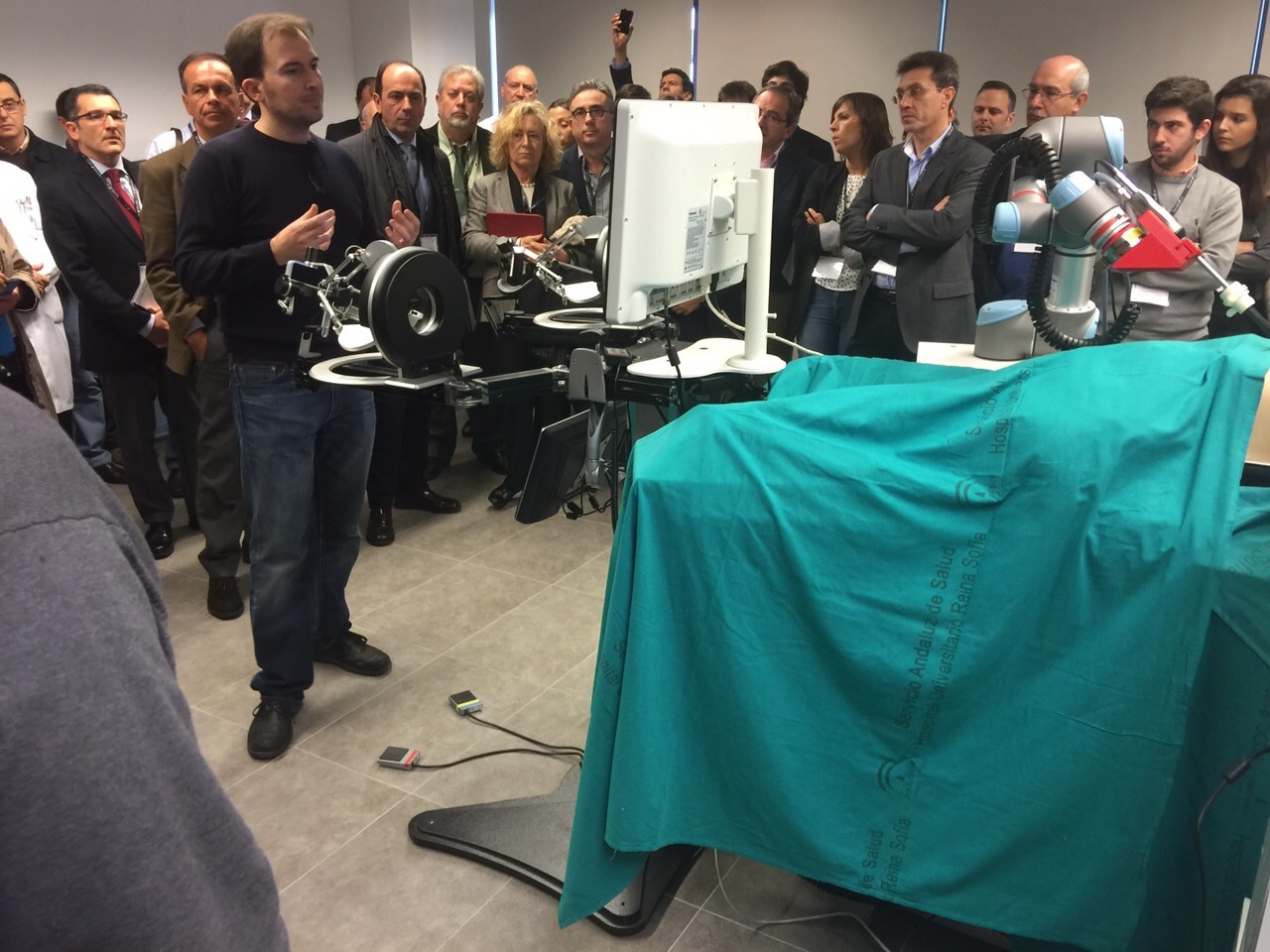
Dr. Moncada participated in a panel discussion on the current state of robotic surgery during the presentation of the surgical robot, which will be named CORDOBA, as part of a National Conference on Surgical Robotics.
This is the result of a technological innovation project funded by the ERDF and the Ministry of Economy and Competitiveness. The project is pioneering because it has relied on the advice of surgeons from the very beginning for the design and manufacture of the device. The goal was to provide advantages and added value compared to what is currently available on the market in the field of laparoscopic surgery.
María José Requena, head of the Urology Department at the Reina Sofía Hospital in Córdoba and one of the coordinators of the Broca project, explained on Thursday that this prototype “needs to be developed, tested, and evaluated for safety so that it can be marketed in the future.”
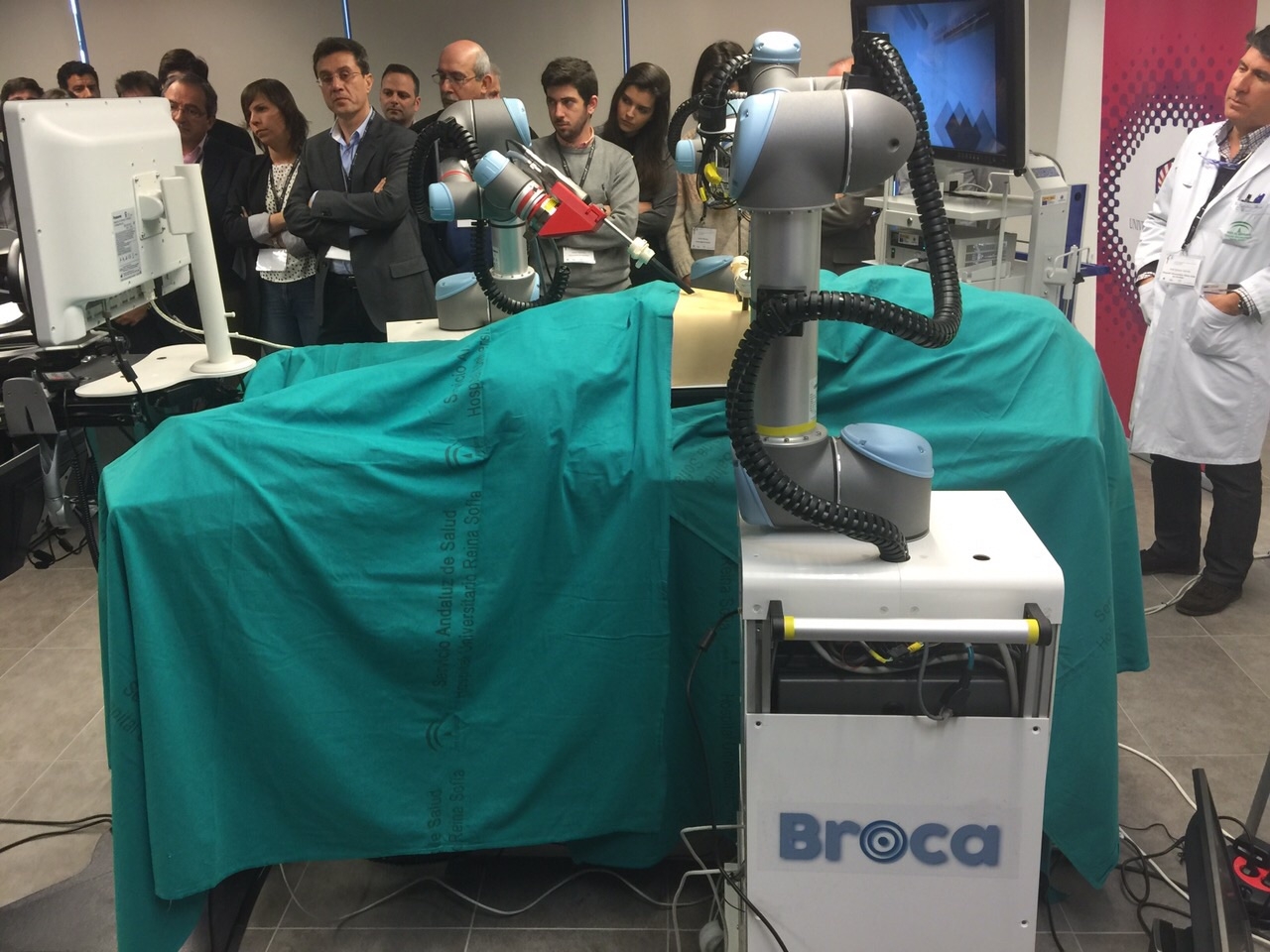
Currently, only the Da Vinci robot is commercially available, but its purchase price—two million euros—is very high for the Spanish and Andalusian public health systems, as are its maintenance costs. The advantages offered by the Spanish system, as explained by Rafael Medina, a professor at the University of Córdoba (UCO) who is collaborating on the engineering aspect of the project, are that due to its smaller size, compared to the Da Vinci, it is more accessible to operating rooms, so it will not require specially adapted spaces or large operating suites.
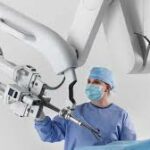
Specifically, the robot consists of three arms that can operate both in coordination with each other and independently, allowing the surgeon to adapt it to the needs of each procedure. In addition, the metal frame supporting the robotic arms is compact, wireless, and easy to move—which is essential in the event that the procedure needs to be converted to open surgery.